

- Home
- Vertigrow 101
- Greenwall
- Drainage Solution / Greenroof
- Rainwater Harvesting
- Products
- What We Do
- Gallery
- Contact Us
Professional Installation
 (632) 8288-4130 (632) 8288-1919 (632) 7092-8926 0932-713-0699
Vertigrow Stormwater Storage 101
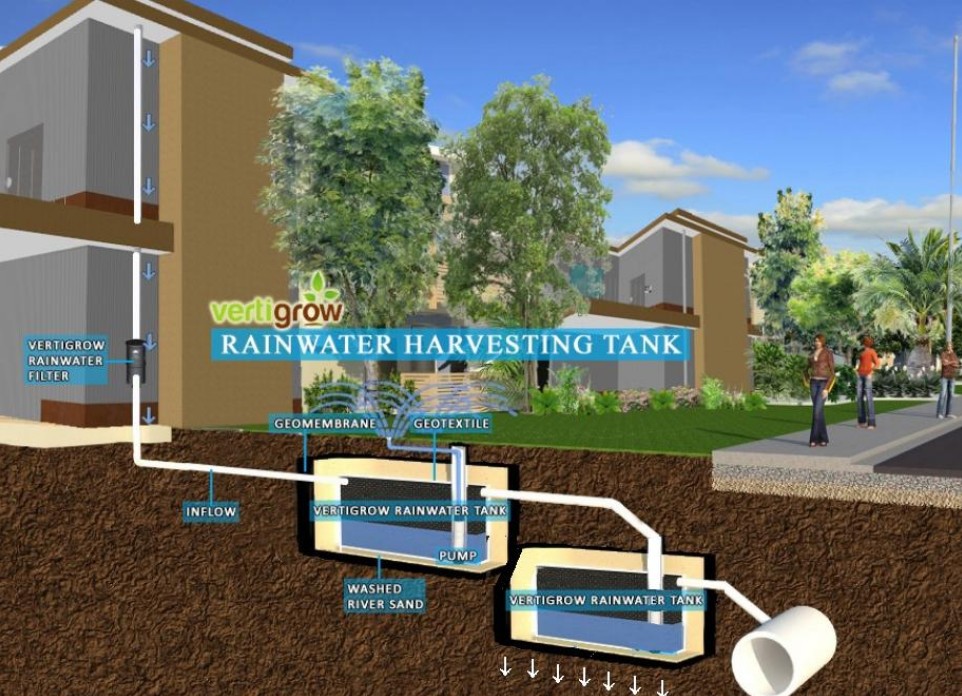
Vertigrow has engineered a highly adaptable modular detention and retention tank system utilizing our signature Vertigrow Modular Tanks. Successfully deployed in numerous projects across the Philippines, the primary advantage of this system is its complete customizability to meet specific client requirements. Whether intended for compact residential setups or expansive commercial developments, the system scales effortlessly. Beyond being incredibly lightweight and highly durable, our modular tanks are designed for rapid installation and hassle-free maintenance. Furthermore, the system promotes eco-friendly practices by maximizing rainwater harvesting, significantly reducing reliance on municipal water supplies and lowering utility costs.
Step-by-Step Installation
- Install rainwater harvesting filters on your roof.
- Direct the roof drainage system into the filter and module box.
- Excavate the area where you plan to install the retention tank.
- Wrap the Vertigrow tanks with a geomembrane and geotextile.
- Connect the drain to the retention tank.
- Install a foot valve inside the tanks for the water pump.
- Direct excess water from the retention tank to the infiltration/detention tank.
- Install an overflow mechanism in the detention tank.
- Connect the outlet of the detention tank to the main drainage system.
Advantages of a Retention Tank
Water harvested in a retention tank can be safely reused for various non-potable applications, such as flushing toilets, washing vehicles, and irrigating gardens. By storing and reusing rainwater, property owners can drastically cut down their utility bills while ensuring a reliable backup water source during dry seasons.
Advantages of an Infiltration Tank
Infiltration tanks (or detention tanks) are crucial for mitigating urban flooding. Instead of overwhelming municipal drainage systems, collected stormwater is allowed to slowly percolate back into the ground. This natural process helps replenish underground aquifers and deep wells, playing a vital role in preventing land subsidence (sinking cities) caused by groundwater depletion.